
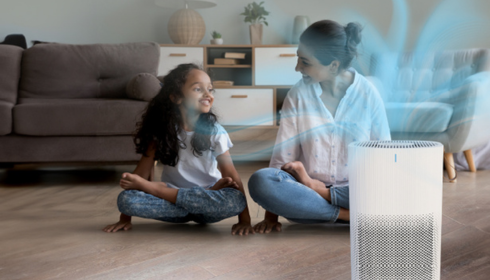
Most people think about air quality when they step outside.
Smoggy traffic. Smoke drifting in from somewhere nearby. Dust blowing around on dry afternoons. Outdoor pollution gets all the attention, mostly because we can actually see it. But the strange part is that the air inside our homes often has a bigger impact on how we feel day to day.
And honestly, many of us barely notice it until something feels wrong.
Maybe you wake up congested every morning. Maybe the house feels stuffy no matter how much you clean. Or perhaps allergies suddenly become worse indoors than outside, which feels backwards when you first realize it.
The truth is, modern homes trap a lot more than we think.
Our Homes Hold Onto Everything
Today’s houses are designed to be energy efficient. That’s great for keeping cooling and heating bills manageable, but it also means indoor air doesn’t circulate as naturally as it once did.
Cooking smells linger longer. Dust settles faster. Pet hair somehow appears in places that make no sense. Add candles, cleaning sprays, moisture, smoke particles, or seasonal pollen into the mix and the air inside a home starts carrying more than we realize.
That’s one reason indoor air quality has become a much bigger conversation over the last few years.
People aren’t suddenly obsessed with sterile living environments. Most homeowners simply want their homes to feel comfortable again. Cleaner air affects sleep, energy, breathing, and even concentration in subtle ways that slowly become noticeable over time.
And honestly, once you improve the air inside a home, the difference can feel surprisingly personal.
You Don’t Need a Perfect House to Breathe Better
This is important because people often assume cleaner air means creating some spotless, unrealistic magazine-style home.
It doesn’t.
Real homes have pets, kids, laundry piles, cooking smells, and dust that somehow reappears five minutes after cleaning. That’s normal. The goal isn’t perfection. It’s reducing the amount of airborne irritants constantly circulating through the space.
For some households, that starts with opening windows more often or improving ventilation. For others, especially in cities or areas affected by smoke and pollution, additional support becomes necessary.
That’s where air filtration systems quietly make a difference.
Good filtration doesn’t magically transform your home overnight, but it can noticeably reduce airborne particles that contribute to allergies, stale air, and general discomfort. Many people report sleeping better or waking up less congested after improving airflow and filtration inside the home.
Even something as simple as replacing old HVAC filters regularly can improve how a house feels.
It’s funny, really. People spend thousands on furniture or décor trying to make a home more comfortable, while completely overlooking the air they breathe for eight hours every night.
The “Heavy Air” Feeling Is Real
You know that feeling when you walk into a room and it somehow feels heavy?
Not necessarily hot. Just stale. Almost tired.
That sensation usually has more to do with airflow and particle buildup than people realize. Homes naturally collect moisture, dust, cooking residue, and microscopic pollutants over time. Without proper circulation, everything lingers longer.
Some houses especially struggle during certain seasons. Winter traps indoor air because windows stay closed constantly. Summer humidity creates a sticky heaviness that can make rooms feel uncomfortable even when the temperature seems fine.
This is one reason homeowners have become more interested in air purification systems, especially after spending more time indoors in recent years.
People began noticing how much their environment affected mood and overall comfort once home became the center of work, relaxation, and daily life all at once.
And honestly, cleaner air has a way of making a space feel calmer without you fully understanding why.
Small Habits Make a Bigger Difference Than Expensive Gadgets
There’s a tendency to think solving indoor air problems requires buying complicated systems immediately. Sometimes it does help, especially for allergies or smoke exposure. But small habits still matter more than people expect.
Things like:
- Vacuuming consistently
- Changing HVAC filters on schedule
- Managing indoor humidity
- Letting fresh air circulate when possible
- Cleaning vents and air returns
- Avoiding excessive synthetic fragrances
These aren’t glamorous solutions, but they work surprisingly well over time.
A lot of air quality issues come from neglecting simple upkeep until particles quietly build up everywhere. Homes naturally accumulate stuff — dust, fibers, moisture, pet dander — because life itself creates those things.
The goal isn’t removing every particle from existence. It’s creating a healthier balance.
Every Home Feels Different for a Reason
Some homes instantly feel fresh when you walk inside. Others feel stale within minutes even if they look clean.
That difference often comes down to airflow, humidity, filtration, and how the home handles circulating air overall. Older houses sometimes breathe naturally through tiny gaps and ventilation quirks. Newer homes tend to trap everything more tightly inside.
Neither is automatically better or worse. They just require different approaches.
And honestly, there’s no universal “perfect” setup for every household. Families with pets have different needs than someone living alone in a small apartment. Homes near busy roads face different air concerns compared to rural properties surrounded by open space.
Understanding your environment matters more than blindly buying the latest trending device online.
A Comfortable Home Starts With the Basics
At the end of the day, cleaner indoor air isn’t really about chasing perfection or becoming obsessed with technology.
It’s about comfort.
A home should feel like a place where your body can relax instead of constantly reacting to dust, dryness, allergens, or stale air. Better breathing, deeper sleep, fewer headaches, less irritation — these things quietly improve daily life in ways people often underestimate.
And maybe that’s why conversations around indoor air quality have grown so much lately. Because once people experience the difference cleaner air can make, it becomes hard to ignore how important it really is.
Sometimes the things we can’t see are the ones affecting us the most.

