
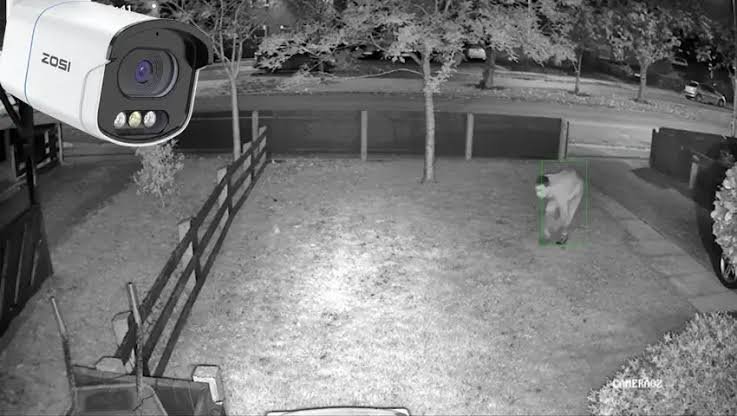
Business security does not end when employees leave for the day. In many commercial environments, the hours after closing can present some of the greatest security challenges. Parking lots become empty, loading areas are less active, exterior entrances receive less supervision, and reduced lighting can make unusual activity harder to detect.
A surveillance system that performs well during daylight hours may not necessarily provide the same level of detail at night. This is why low-light performance should be considered when planning cameras for offices, warehouses, retail properties, construction sites, parking facilities, and other commercial spaces.
Modern surveillance technology provides several ways to maintain visibility after dark. Understanding infrared illumination, low-light sensors, camera placement, environmental lighting, and recording settings can help businesses choose equipment that continues delivering useful footage around the clock.
Why Nighttime Surveillance Requires Different Planning
During the day, natural light provides cameras with plenty of information. Colors, objects, movement, and environmental details are generally easier to capture.
At night, the situation changes.
Available light may come only from parking lot fixtures, streetlights, illuminated signs, building entrances, or passing vehicles. Some areas may have almost no visible illumination at all.
When a camera does not receive enough light, footage can become grainy, blurry, or too dark to provide meaningful evidence.
Simply installing a high-resolution camera does not automatically solve this problem. Resolution is important, but nighttime performance also depends on the camera sensor, lens, infrared capability, placement, and surrounding lighting conditions.
Understanding Infrared Night Vision
Many modern security cameras use infrared illumination to monitor dark environments.
Infrared LEDs positioned around or near the camera emit light that humans generally cannot see but that the camera sensor can detect. This allows the camera to produce an image even when visible lighting is extremely limited.
The resulting footage is often displayed in black and white.
Infrared can be highly effective for monitoring entrances, building exteriors, storage areas, alleys, and other locations that become dark after business hours.
However, infrared performance has limits.
Objects that are too far from the camera may not receive enough infrared illumination. Reflective surfaces can also create glare, while nearby walls or objects may reflect infrared light back toward the camera.
Proper positioning is therefore essential.
Why Day-to-Night Switching Matters
Commercial properties rarely remain at one consistent lighting level.
A parking area may be brightly illuminated during the afternoon, moderately lit around sunset, and significantly darker after exterior lights are turned off. Cameras need to adapt to those changing conditions.
Modern surveillance equipment with Day/Night Functionality can adjust its imaging behavior as available light changes, helping businesses maintain more useful surveillance coverage throughout a full 24-hour cycle.
This transition is important because a camera optimized only for bright daytime conditions may struggle when lighting decreases.
When evaluating cameras, businesses should consider performance across several lighting conditions instead of judging image quality from a daytime demonstration alone.
Low-Light Color Cameras Offer Another Option
Infrared is not the only method used for nighttime surveillance.
Some modern cameras are designed with highly sensitive image sensors that can produce usable color footage in relatively low-light environments.
Color can provide additional investigative information.
For example, distinguishing between a red vehicle and a dark blue vehicle can be more useful than seeing two similar gray objects in black-and-white infrared footage.
However, low-light color performance still depends on having some available light.
A location with virtually no illumination may still require infrared or supplemental lighting. The correct solution depends on the property and what the camera needs to capture.
Camera Placement Becomes Even More Important at Night
A camera that appears perfectly positioned during daylight may encounter problems after sunset.
Vehicle headlights can create strong glare. Bright exterior fixtures may cause overexposure. Deep shadows can make parts of the image difficult to see.
For example, pointing a camera directly toward a powerful parking lot light may cause the camera to compensate for the bright source, making surrounding areas appear darker.
Professional installation should account for these conditions before finalizing camera positions.
Testing should ideally include both daytime and nighttime performance.
Entrances Need Special Attention
Building entrances are among the most important areas to monitor after hours.
They are also challenging because lighting can vary dramatically.
An exterior entrance may be dark while the interior lobby behind a glass door remains brightly illuminated. Someone approaching the entrance could appear as a silhouette if the camera cannot manage the difference between bright and dark areas.
Features designed to handle challenging contrast can improve image usability in these situations.
Camera position also matters.
The goal should be to obtain useful views of people approaching and leaving the entrance rather than simply recording a wide overview of the doorway.
Parking Areas Create Unique Challenges
Commercial parking lots are often large, open spaces with inconsistent lighting.
Some areas may be directly beneath powerful fixtures while others remain partially dark. Moving headlights create sudden changes in exposure, and vehicles can block important lines of sight.
Businesses should determine what they expect cameras to accomplish.
A wide-angle camera may be useful for observing general activity across the parking lot, while additional cameras may be needed for entrances, vehicle access points, or other areas where greater detail matters.
Trying to make one camera perform every task can result in footage that is too general to be useful.
Loading Docks and Warehouses Need Reliable Coverage
Loading zones frequently remain active outside normal office hours.
Delivery vehicles may arrive early in the morning or late at night, and valuable inventory may move through these areas.
Warehouse exteriors can also include large sections with limited lighting.
Night-capable surveillance can help businesses monitor vehicle arrivals, loading activity, restricted areas, and unexpected movement around the property.
Inside a warehouse, cameras may encounter another challenge: lights may be reduced or switched off when employees leave.
The system should be designed with those changing conditions in mind.
Motion Detection Should Be Configured for Night Conditions
Nighttime environments can create false motion events.
Insects near infrared lights, moving shadows, weather, reflections, and sudden headlights may all trigger basic motion detection.
Businesses using video analytics should review detection performance after dark rather than assuming daytime settings will work equally well at night.
Detection zones can help.
For example, a camera overlooking a property near a public road can be configured to focus on the actual business perimeter rather than passing traffic.
Sensitivity settings may also need adjustment.
The objective is to generate meaningful alerts rather than notifications every time something changes within the image.
Exterior Lighting Still Has Value
Night vision technology does not make property lighting unnecessary.
Good exterior lighting can improve both physical security and camera performance.
Well-designed lighting around entrances, walkways, loading areas, and parking facilities can discourage unwanted activity while helping cameras produce clearer footage.
The key is placement.
Extremely bright lights pointed directly toward a camera can create problems just as easily as insufficient lighting.
Security camera planning and exterior lighting design should therefore complement one another.
Consider the Purpose of Every Camera
Businesses should avoid choosing cameras based only on specifications.
Instead, determine the purpose of each camera first.
Is the camera intended to provide an overview of a parking lot? Monitor a door? Observe a loading dock? Record activity near expensive equipment? Watch a restricted perimeter?
Different objectives require different fields of view, camera positions, lenses, and low-light capabilities.
This approach helps businesses avoid spending money on impressive specifications that do not actually address their security risks.
Test the System After Sunset
A surveillance installation should not be considered complete simply because every camera works during daytime testing.
Nighttime verification is essential.
Businesses should review whether important areas remain visible, whether infrared illumination reaches the necessary distance, and whether exterior lights create glare.
It is also worth testing realistic scenarios.
Have someone approach an entrance, walk across a monitored area, or drive through a parking lot after dark. Then review the footage and determine whether it provides enough information to understand what happened.
Problems identified during testing can often be corrected through positioning or configuration adjustments.
Keep Cameras Clean and Maintained
Outdoor cameras are exposed to dust, weather, insects, and environmental debris.
Even a small amount of dirt on a camera cover can affect nighttime images significantly because infrared light may reflect off the contamination and create haze or glare.
Regular inspection is therefore important.
Businesses should periodically check camera lenses, housings, mounts, connections, and recorded image quality.
A camera may technically still be online while providing footage that is no longer useful.
Build Security Around the Entire 24-Hour Cycle
Choosing cameras for a commercial property should involve more than looking at daytime image quality.
Businesses operate in environments where lighting changes constantly, and some of the most important security events may occur when the property is dark and largely unoccupied.
Infrared illumination, low-light sensors, intelligent day-to-night switching, thoughtful camera placement, appropriate exterior lighting, and properly configured analytics can all contribute to more effective after-hours monitoring.
The objective is not simply to record activity. It is to capture footage that remains useful when a business actually needs to investigate an event.
By designing surveillance around both daytime and nighttime conditions, businesses can create a more dependable security system that monitors important areas around the clock rather than losing effectiveness when the sun goes down.