Detecting Hidden Leaks Before Rain Causes Catastrophic Damage
When heavy autumn and winter rainstorms strike, your home’s roofline takes a severe beating. Among all exterior structures, the area surrounding the base of your chimney is uniquely vulnerable to water intrusion. Because brick masonry expands and contracts at a different rate than surrounding wood roof decking, the intersection between your chimney stack and roof slope is under constant mechanical stress. If the seals at this junction degrade, heavy rainwater quickly penetrates your roof envelope, pools inside the attic framing, and runs down interior walls. Recognizing early warning signs around your chimney base allows you to catch leaks before they cause rot, dangerous mold growth, and expensive structural failures.
Water Stains on Attic Rafters and Ceilings
One of the earliest indicators of a chimney base leak shows up high above your living space inside the attic. During or immediately after a heavy rainstorm, grab a flashlight and inspect the attic space surrounding the chimney chase framing. Look for dark water streaks along timber rafters, damp insulation batting, or water staining on ceiling drywall in adjacent rooms below. Even if water isn’t actively dripping onto your ceiling, damp wood framing indicates rainwater is bypassing your roof’s outer weather barrier and slowly weakening structural framing members through wood rot.
Damp Firebox Brickwork and Musty Chimney Odors
Water entering around a chimney base doesn’t always stay in the attic; it often travels straight down the exterior masonry stack into the living area. If you notice damp, discolored brickwork inside your firebox, pooling water on the hearth floor, or crumbling firebrick mortar, water is actively penetrating the chimney structure. Persistent dampness mixed with creosote deposits creates a strong, unpleasant musty odor—like a wet campfire—that intensifies during humid or rainy weather. This stale smell clearly signals moisture trapped inside your venting system.
Rusted Dampers and Peeling Interior Wall Paint
Metal components inside your fireplace hearth are excellent indicators of unwanted moisture intrusion. Inspect your throat damper plate, control handles, and firebox grate for sudden flaking rust or corrosion. Rainwater leaking down the chimney column accelerates metal oxidation, causing dampers to stick, warp, or rust completely off their hinges. Similarly, look at interior drywall and wallpaper on walls adjoining the chimney stack on upper floors. Peeling paint, bubbling wallpaper, or yellowish water rings indicate water is soaking through the chimney’s outer brickwork and saturating interior wall assemblies.
Flashing Separation and Sealant Breakdown at the Roofline
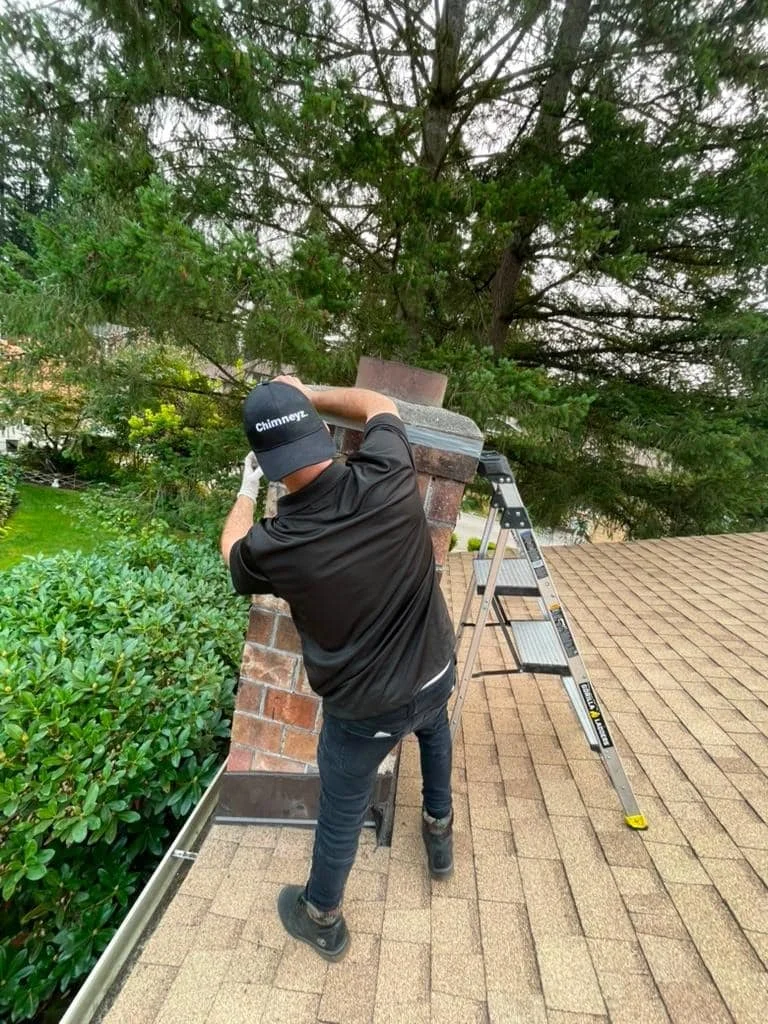
If you can safely view your roofline from ground level or an upper window, pay close attention to metal flashing around the chimney base. Over time, building settling, thermal expansion, and strong winds can tear counter flashing away from mortar joints, leaving gaps where water can enter freely. Look for cracked, dried-out caulk lines, rusted metal flashing strips, missing crickets on the high side of the chimney, or shingles lifting near the masonry base. Property owners experiencing these flashing failures should seek immediate technical help to schedule a damaged counter flashing replacement before wet weather causes severe timber damage.
Stopping Water Intrusion Before Structural Rot Takes Hold
Ignoring subtle warning signs around your chimney base turns minor sealant maintenance into major structural restoration projects. By checking attic rafters for moisture, monitoring fireboxes for dampness, inspecting metal dampers for rust, and watching exterior roofline flashing, you can catch water leaks early. Protecting your building envelope demands prompt, technical intervention. Contact a certified leak repair and flashing specialist today for a thorough water-intrusion audit and to protect your home from rainy weather.