
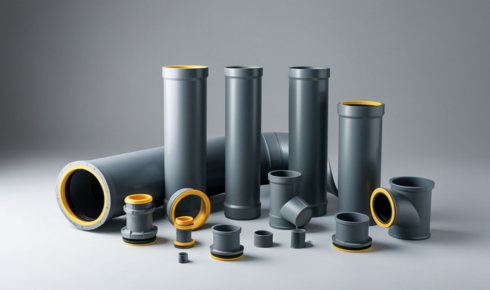
If you’ve ever stood near a construction site and thought, “Pipes are pipes, aren’t they?”, you’re not alone. From the outside, they all look quite similar, round, tucked away, and usually out of sight once the job’s done. But behind the scenes, the differences between pressure pipe fittings, stormwater pipe fittings, and electrical pipes are far more important than they appear.
Each of these systems has a very different role to play, and they’re designed to handle completely different challenges. When the wrong type is used, it doesn’t just cause minor issues; it can lead to leaks, damage, or serious safety risks. Once you understand what each pipe is designed to deal with, the need for different designs becomes a lot more obvious.
Not All Pipes Live the Same Life
The biggest reason these pipes can’t share the same design comes down to what they carry and how they operate. Pressure pipe fittings are built to withstand force pushing outward from the inside. Water flowing freely, which is mostly under gravity, is dealt with by stormwater pipe fittings. Furthermore, in order to keep people safe and protect cables, electrical pipes are used as they don’t carry any water at all.
One single difference can mess up everything. Wall thickness, joint strength, materials, and safety requirements all shift depending on the job. Using the wrong system in the wrong place is a bit like wearing flip-flops to a construction site. Yes, technically it’s footwear, but it’s definitely not the right choice.
What Makes Pressure Pipe Fittings So Specialised
The main goals of pressure pipe fittings are containment and control. Water, gas, or other fluids are carried by these systems under pressure, which means the contents are continuously pressing against the pipe walls and joints. They are found in irrigation systems, water supply networks, and industrial setups where consistent flow is crucial.
Pressure pipe fittings must therefore provide extremely tight connections. The joints are made to remain sealed even under continuous tension, and the materials are often stronger and thicker. A minor flaw can swiftly develop into a leak and, in the worst situation, a complete pipe failure.
Here, consistency is also important. Predictable performance is essential for pressure systems. The network as a whole may be disrupted if one fitting fails. These fittings are therefore thoroughly tested and rated for particular pressure restrictions. They are essential safety elements rather than merely connectors.
Why Stormwater Pipe Fittings Play by Different Rules
Stormwater pipe fittings function in a somewhat less regulated setting. They control rainwater runoff, which varies with the weather, instead of dealing with continuous internal pressure. They may be carrying a trickle one day and an intense downpour the next.
Stormwater pipe fittings are made to keep water flowing smoothly rather than concentrating on tight seals. Without blocking or backing up, they must manage leaves, dirt, sediment, and sudden surges. For this reason, instead of containing pressure, they are frequently broader and curved to direct flow.
They’re also exposed to shifting ground, traffic loads, and temperature changes. Stormwater systems are usually buried closer to the surface, so flexibility and toughness matter more than pressure resistance. A bit of movement is expected, and the design allows for it.
Electrical Pipes: Protection Comes First
Electrical pipes might look similar to plumbing pipes, but their job is completely different. They don’t move fluids of any kind. Instead, they act as a protective shield for electrical wiring, keeping cables safe from damage and people safe from electrical hazards.
Because of this, safety is the top priority. Electrical pipes are designed to insulate, protect, and guide cables without interfering with their function. The materials are chosen to resist heat, prevent conductivity, and handle environmental exposure.
Unlike pressure pipe fittings or stormwater pipe fittings, electrical pipes don’t need to worry about leaks or water flow. What they do need is easy access. Wiring often changes over time, so these pipes are designed to make installation, upgrades, and repairs as straightforward as possible. Smooth interiors and gentle bends make pulling cables much easier.
Materials Make a Big Difference
The materials used across these systems highlight just how different their roles are. Pressure pipe fittings often use PVC-U, HDPE, ductile iron, or steel, which are materials known for strength and durability under pressure. The goal is to resist both internal force and long-term wear.
Stormwater pipe fittings commonly use PVC, polypropylene, or concrete. These materials perform well underground and can handle impact, moisture, and soil movement. They don’t need to be pressure-rated, but they do need to last in tough conditions.
Electrical pipes usually rely on non-conductive materials like PVC. In some settings, metal conduits are used, but even then, the focus is on grounding and protection rather than strength against pressure. The choice of material is driven more by safety codes than mechanical demands.
Joint Design Tells the Real Story
To see what sets these pipes apart, consider their joining processes. Their fittings are made to be self-sealed joints, solvent-welded joints, rubber ring seals, threaded joints, or flanges. All these take care to ensure water does not leak when under pressure.
Some stormwater pipe fittings have flexible rubber ring joints. These let the pipes move a little, which is important for handling settlement and changes in temperature. Fixed joints, on the other hand, can crack in such situations.
Electrical pipes use joints that are easy to assemble and adjust. The types of joints include those that are snapped together, screwed, and glued. The objective here is to provide a continuous waterproofing mechanism for wiring purposes.
Installation Conditions Shape the Design
Where and how pipes are installed also influences their design. Pressure systems are usually buried deeper or placed in controlled environments because failures can be costly and dangerous. Their fittings must handle internal pressure and external loads at the same time.
Stormwater systems often stretch across large areas and vary in depth. They’re designed to be forgiving, allowing for minor alignment issues or ground movement without failing.
Electrical pipes might run underground, inside walls, or along exposed surfaces. They need to adapt to all of these situations while still meeting strict safety standards. Ease of access often matters more than sheer strength.
Maintenance and Long-Term Performance
Maintenance requirements are another area where these systems differ from one another. If properly maintained, pressure pipe fittings should last for many years. Since many customers are impacted when a pressure system is shut down, maintenance is typically planned carefully.
Sediment and debris are constantly in contact with stormwater pipe fittings. After times of intense rain or seasonal changes, their designs frequently make cleaning and inspection possible, which is crucial.
It is a common practice to have access to the electrical pipes for maintenance or repairs. Wiring requirements change, buildings change, and technology advances. These solutions are made to facilitate access in the future, which will eventually save time and money.
Safety and Regulations Can’t Be Ignored
Every system has its own set of rules, and for good reason. Flooding or pollution may result from a pressure pipe fitting failure. Road damage, property problems, and erosion can result from poor stormwater planning. Serious fire and electrocution risks are associated with defective electrical pipes.
Every design choice, from materials to installation techniques, is influenced by these hazards. Not only is it wise to use the proper pipe system, but it is frequently mandated by law.
Why Mixing Systems Is a Bad Idea
It can be tempting to use whatever pipe is cheapest or readily available, but that’s where trouble starts. Pressure pipe fittings used in stormwater systems are often unnecessary and costly. Stormwater fittings used in pressure systems can fail quickly and cause leaks.
Electrical pipes should never be replaced with plumbing pipes, even if they look similar. The safety requirements are completely different, and the risks just aren’t worth it. Each system is designed for a specific purpose, and ignoring that usually leads to higher costs, safety issues, and headaches later on.
Conclusion
In the end, pressure pipe fittings, stormwater pipe fittings, and electrical pipes are made for completely different jobs. Pressure pipes are built to withstand pressure, stormwater pipes handle changing water flow, and electrical pipes protect cables and keep people safe.
Because of this, each one is designed differently, from the materials used to how they’re joined, installed, and maintained. Once you understand what each system needs to handle, it’s clear why they can’t all be built the same way.
So next time you see a group of pipes on a construction site, keep in mind that even if they look similar, each one has a specific purpose. And with pipes, choosing the right design for the job really matters.

