
It usually doesn’t start with a big problem. More like a quiet realization. Maybe your morning tea tastes a little flat, or your shower leaves your skin feeling oddly tight. Nothing dramatic, nothing urgent — just small things that don’t quite sit right.
Water has this way of slipping into the background of life. We trust it, rely on it, barely think about it. Until one day, we do.
And once you notice, it’s hard to ignore.
The Subtle Clues Your Home Gives You
Homes are full of signals. You just have to catch them. A chalky ring in the kettle. Glassware that never looks fully clean. Soap that doesn’t lather the way it should. It’s easy to blame products or habits, but often, it’s the water quietly shaping those outcomes.
Different regions bring different water characteristics — minerals, chlorine levels, even trace elements you’d never suspect. None of it necessarily harmful, but not exactly ideal either.
That’s when people start exploring solutions. Not because they want something fancy, but because they want things to feel… normal again.
Thinking Beyond the Tap
One of the first ideas that comes up is whole-home filtration. And at first, it can sound like overkill. Filtering water for the entire house? Isn’t that a bit much?
But when you think about it, water touches everything. Not just what you drink, but what you cook with, bathe in, clean with. A whole-home system works quietly in the background, treating water at the point it enters your house. The result isn’t flashy — it’s consistent.
Showers feel softer. Laundry comes out fresher. Even the air, somehow, feels cleaner. It’s not magic, just the absence of things that used to get in the way.
The Taste Factor You Can’t Ignore
Let’s talk about drinking water for a moment. Because taste matters more than we like to admit.
If your tap water has even a slight chemical edge, you’ll notice it in everything — tea, coffee, even ice cubes. And once you start noticing it, it’s hard to go back to ignoring it.
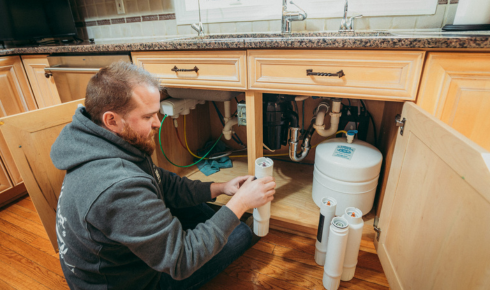
That’s where reverse osmosis drinking water systems come in. They’re designed to filter out a wide range of impurities at a very fine level, leaving water that tastes clean, almost crisp.
People often say the difference is immediate. Not in a dramatic, life-changing way — more like, “Oh… this is how it’s supposed to taste.” And suddenly, drinking more water feels natural again.
The Quiet Problem of Hard Water
Hard water is a different kind of issue. It doesn’t shout for attention. It just… lingers.
Minerals build up slowly, coating pipes, appliances, even your skin and hair. Over time, you start to see the effects. Fixtures lose their shine. Appliances work a little harder. Clothes feel rougher after washing.
It’s not something you fix overnight, but it’s something you can manage.
That’s where water softening systems make a noticeable difference. By reducing mineral content, they help water behave the way it’s supposed to — gentler, more cooperative. Soap lathers better. Surfaces stay cleaner. And your home feels just a bit easier to maintain.
Finding What Works for You
Here’s the thing: there’s no single solution that fits everyone. Some homes need comprehensive systems, others just a targeted fix. It depends on what your water is doing — and what you want it to do differently.
Testing your water is often the best place to start. It takes the guesswork out of the equation and gives you a clear direction. From there, you can choose solutions that actually make sense, instead of chasing trends or overcomplicating things.
And honestly, simpler is usually better.
The Changes You Don’t Notice Right Away
What’s interesting about improving water quality is how subtle the benefits feel at first. There’s no big reveal, no dramatic before-and-after moment.
Instead, it’s a series of small shifts. Your kettle stays cleaner. Your skin feels less dry. Your morning coffee tastes a little brighter. You stop thinking about your water — and that’s when you know something’s working.
Because good water doesn’t demand attention. It supports your routine quietly, without getting in the way.
A Different Kind of Home Comfort
We often think of home improvements in terms of things we can see — new furniture, fresh paint, updated lighting. But water is different. It’s invisible, yet it touches almost every part of daily life.
Improving it isn’t about aesthetics. It’s about comfort. About removing small irritations that add up over time.
And once those irritations are gone, you realize how much they were affecting you.
Closing Thoughts
Paying attention to your water isn’t about being overly cautious or chasing perfection. It’s about noticing the details that shape your everyday experience.
Whether it’s filtering what you drink, softening what you use, or simply understanding what’s coming out of your tap, the goal is the same: making life feel a little smoother.
And sometimes, that starts with something as simple as a glass of water that finally tastes right.

