
Most homeowners don’t think about water until it starts leaving evidence behind.
White streaks on faucets. Chalky buildup in kettles. Shower doors that never quite look clean, no matter how much elbow grease you apply. And then there’s the subtle stuff—skin that feels tight after bathing, hair that seems dull, laundry that loses its softness too quickly.
It’s easy to shrug it off. “That’s just how water is,” we tell ourselves.
But once you understand what’s happening—and what can be done about it—you start looking at your plumbing, your appliances, even your soap differently.
The Quiet Impact of Hard Water
Hard water contains higher levels of calcium and magnesium. These minerals are naturally occurring and not harmful to drink. In fact, they’re part of what makes groundwater unique in different regions.
The issue isn’t safety. It’s accumulation.
Over time, those minerals cling to pipes and heating elements. They form scale inside water heaters, dishwashers, and washing machines. Soap reacts with minerals and leaves residue instead of rinsing clean. Shampoo lathers less effectively. Dishes dry with spots.
The changes happen gradually. That’s what makes them easy to ignore.
Until you see your appliance repair bill.
What Softening Actually Does
This is where water softener systems come into play.
Despite the name, softeners don’t “clean” water in the way filters do. They don’t remove sediment or bacteria. Instead, they address hardness specifically by removing those calcium and magnesium ions responsible for scaling.
The process is surprisingly elegant.
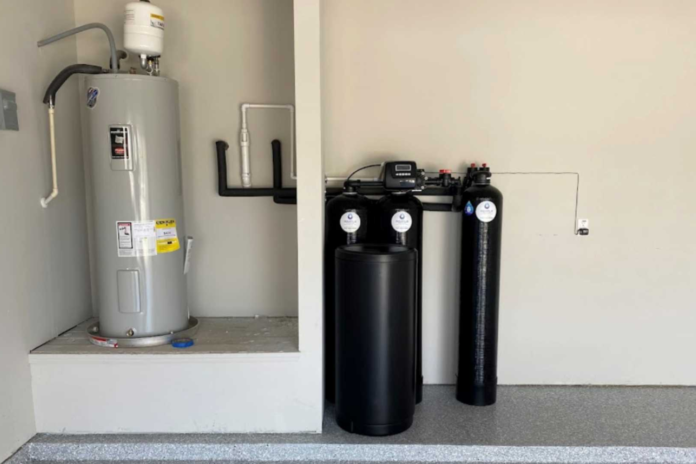
Inside the system is a tank filled with resin beads. As water flows through, those beads capture hardness minerals and release sodium (or potassium) ions in exchange. It’s called the ion exchange process, and it’s been around for decades because it works reliably.
Eventually, the resin beads need to be recharged. That’s where the salt tank comes in. A brine solution flushes the captured minerals away, restoring the beads’ ability to continue softening.
It’s not complicated once you understand it. And once installed, it operates mostly in the background.
The Everyday Differences
People often ask, “Will I really notice a difference?”
In many cases, yes—but not in dramatic, flashy ways.
Soap lathers more easily. Showers leave skin feeling less dry. Laundry feels softer without extra detergent. Faucets stay cleaner longer. Water heaters operate more efficiently.
Even simple tasks like washing your car or cleaning glass surfaces become easier.
You don’t wake up one morning thinking, “Wow, my life is transformed.” It’s subtler than that.
But over weeks and months, those subtle improvements add up.
The Appliance Angle
One of the less obvious benefits of installing a softener is the impact on appliances.
Scale buildup reduces efficiency. Heating elements coated in minerals require more energy to heat water. Pipes narrowed by scale restrict flow. Dishwashers and washing machines experience additional wear.
By preventing mineral accumulation, softeners help extend appliance lifespan and maintain performance.
It’s not just about comfort—it’s about protecting infrastructure.
What Softened Water Feels Like
There’s a particular sensation that people describe after switching to softened water. It feels almost silky.
That feeling comes from the absence of mineral residue interfering with soap. Instead of leaving a film, soap rinses cleanly. Skin doesn’t feel tight. Hair retains moisture better.
For some, it takes a few days to adjust. The “slippery” feeling can feel unusual at first because we’re so used to mineral interference.
But once acclimated, many homeowners say they wouldn’t go back.
Is Softening Right for Every Home?
Not necessarily.
If your local water supply is already low in hardness, a softener may offer minimal benefit. That’s why testing is important before installation.
Hardness levels vary significantly by region. In some areas, scale buildup is barely noticeable. In others, it’s a persistent issue.
Understanding your water profile helps determine whether a softener makes sense.
It’s not about chasing trends. It’s about responding to actual conditions.
Maintenance Isn’t Complicated
Owning a softener doesn’t require constant oversight.
The primary task is replenishing salt in the brine tank. Most systems alert you when levels are low. Periodic inspection ensures everything operates smoothly.
It’s comparable to maintaining other home systems—HVAC filters, smoke detectors, water heaters.
Simple, routine care keeps performance consistent.
Environmental Considerations
Some homeowners worry about environmental impact.
Modern systems are designed to operate efficiently, using measured amounts of water and salt during regeneration cycles. Choosing a properly sized system also minimizes waste.
And there’s a sustainability angle to consider: appliances that last longer require fewer replacements. Efficient water heaters consume less energy.
As with many home upgrades, balance and proper installation make the difference.
A Practical Upgrade, Not a Luxury
Softening water isn’t about indulgence. It’s about practicality.
It reduces cleaning effort. Protects plumbing. Preserves appliance performance. Enhances comfort.
When you consider how often water flows through your home—showers, laundry, dishes, cooking—it’s one of the most frequently used resources you have.

